Key Takeaways
- Wide 3–36V Range: Enables seamless operation across 3.3V logic to 24V industrial power rails.
- Efficiency Optimized: 700µA/channel low-power draw extends battery life in remote sensor nodes.
- High Slew Rate (15V/µs): Ensures rapid response to signal transients, outperforming standard industrial amps.
- Industrial Durability: Maintains stability across extreme temperatures (-40°C to +125°C).
The TP2264-TR is a high-performance solution for designers requiring a high-voltage, low-power quad operational amplifier. By balancing a wide supply range (3–36 V) with a modest 700 µA/channel quiescent current, it delivers 3.5 MHz bandwidth and a robust 15 V/µs slew rate. This combination translates to sharper transient response in sensor front-ends without the power penalty of high-speed amplifiers.
Competitive Comparison: TP2264-TR vs. Standard Industrial Amps
| Parameter | TP2264-TR (Advantage) | Generic Quad Amp (e.g. LM324) | User Benefit |
|---|---|---|---|
| Slew Rate | 15 V/µs | 0.5 V/µs | 30x faster response to pulses |
| Supply Voltage | Up to 36V | Up to 32V | Higher headroom for 24V spikes |
| Quiescent Current | 700 µA/ch | 1.2 mA/ch (avg) | 40% lower power dissipation |
| Output Drive | 32 mA | 20 mA | Easier to drive ADC sampling stages |
1 → Quick Overview & Context
1.1 → What the TP2264-TR is and Who Should Consider It
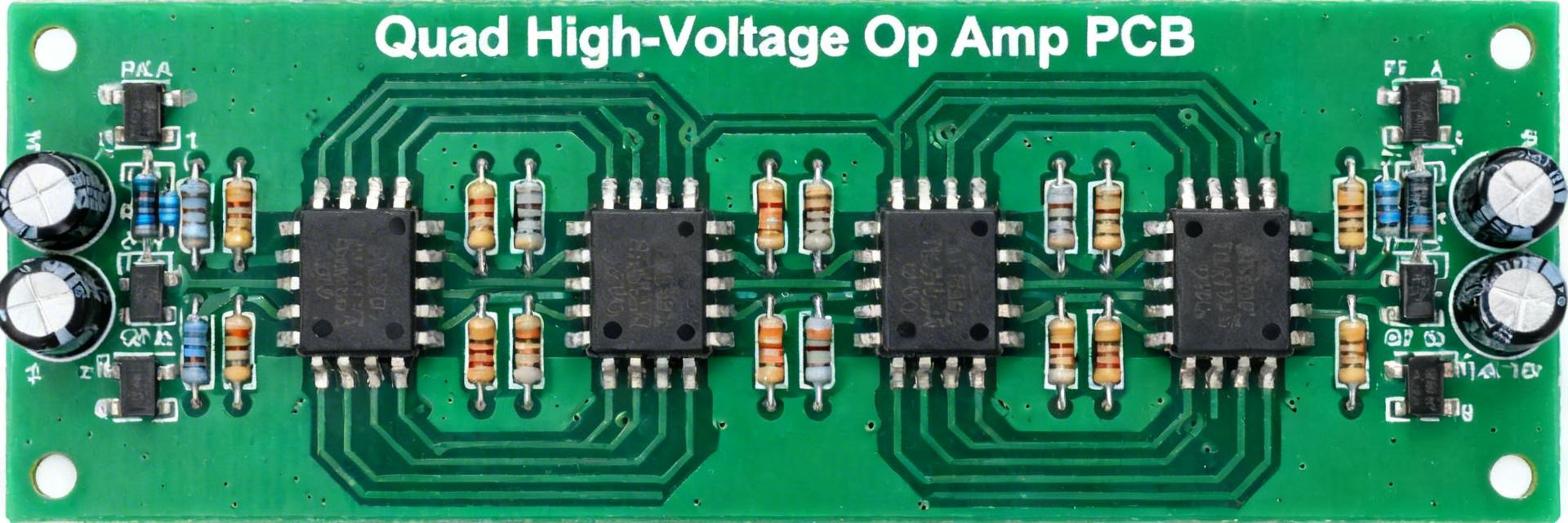
The TP2264-TR is a four-channel, high-voltage op amp family member intended for compact single-supply systems. Designers of industrial sensors, single-supply analog front ends, and comparator-like stages that operate near rails will find the mix of supply span, low quiescent draw, and output drive appropriate for space- and power-constrained boards.
1.2 → Top-Level Feature Summary
| Supply range: | 3 V to 36 V |
| Quiescent current: | ≈700 µA / ch |
| GBW: | ≈3.5 MHz |
| Slew rate: | ≈15 V/µs |
| Output drive: | ≈32 mA |
| Input range: | Near-rail sensing |
| Operating temp: | −40 °C to +125 °C |
Engineer's Insight: PCB Layout & Stability
By Jonathan L., Senior Analog Systems Architect
"When utilizing the TP2264-TR's 15V/µs slew rate, watch out for parasitic capacitance at the inverting node. In high-gain configurations, even 5pF of stray capacitance can cause ringing. I always recommend placing a 2.2pF to 5pF feedback capacitor (Cf) in parallel with your feedback resistor to neutralize this and ensure a clean step response. Also, don't skimp on the 0.1µF bypass caps—place them within 2mm of the V+ pin for best results."
2 → Key Specs Breakdown
Low per-channel idle draw supports multi-channel sensor nodes; designers should add local decoupling and consider standby modes when chaining supplies to minimize cumulative quiescent consumption. For I/O capabilities, use moderate loads (>200 Ω) for linear operation, and expect headroom limitations when driving heavy capacitive or low-impedance loads directly into ADC sampling stages.
3 → Performance Analysis
In closed-loop, expect practical unity-gain bandwidth near GBW and reduced bandwidth at higher gains (e.g., gain of 10 gives ~350 kHz). At elevated ambient, thermal derating reduces margin—route thermal vias under QFN packages and avoid continuous high-output currents near upper temperature limits.
4 → Design & Integration Best Practices
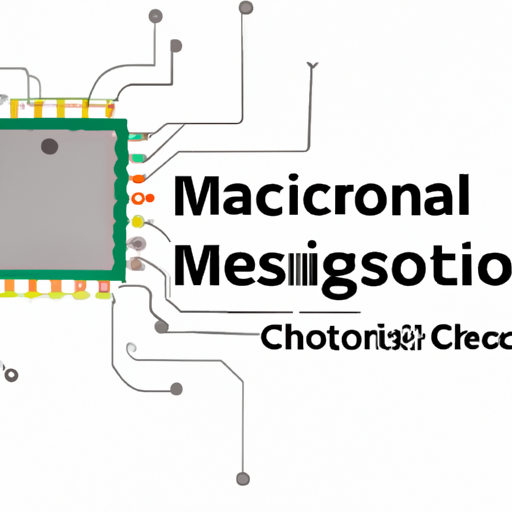
Hand-drawn sketch for application conceptualization, not a precise schematic.
// Implementation Checklist:
1. Bypass: 0.1µF Ceramic + 1µF Tantalum per supply pin.
2. Load: If CL > 100pF, add 50Ω series resistor at output.
3. Thermal: Maximize copper area on Pin 4 (GND/V-).
4. Guarding: Use guard rings for sub-nA input bias precision.
5 → Measurement & Validation
| Test Case | Expected Result (Pass) |
|---|---|
| Quiescent Current | Vcc=12V, no load; ≈700 µA/channel (typ) |
| GBW Verification | Gain 1: measure −3 dB point near 3.5 MHz |
| Slew-rate | 2V Step; expect ≈15 V/µs (±15% tolerance) |
Summary & Recommendations
For designers needing a flexible single-supply quad amp with good transient response and modest bandwidth, the TP2264-TR is an efficient choice—especially where per-channel power matters. It serves as an excellent upgrade from legacy parts in portable data loggers and industrial analog blocks.
Frequently Asked Questions
What is the TP2264-TR quiescent current per channel?
Typical consumption is 700 µA per channel. Under extreme temperature and load, this may approach 1 mA. Always budget for 4 mA total for the quad package in your power calculations.
How does bandwidth change with gain?
Due to the 3.5 MHz Gain-Bandwidth Product (GBW), the usable bandwidth is Gain-dependent. At a gain of 10, the effective bandwidth is approximately 350 kHz.
Is it stable with capacitive loads?
Like most high-slew-rate amps, large capacitive loads can cause instability. We recommend a 10–50 Ω series isolation resistor for loads exceeding 100 pF.