The TP5591U-CR datasheet reports ultra-low input offset (typical ≤ 20 µV), near-zero drift (~0.01 µV/°C), and input noise down to 17 nV/√Hz at 1 kHz — numbers that define success in precision, low-noise front ends. This deep dive decodes the electrical data, highlights the pinout and package considerations, and provides practical test and layout advice so engineers can move from datasheet to prototype faster.
1 — Overview & At‑a‑Glance Performance
Precision Signal Conditioning Architecture
The TP5591U-CR is a precision, zero‑drift operational amplifier family member targeted at precision sensing, ADC front‑ends, and low‑noise instrumentation. Its microvolt‑level drift identifies it as suitable where initial calibration and long‑term stability are critical.
| Parameter | Typical Value | Condition / Note |
|---|---|---|
| Input Offset Voltage | ≤ 20 µV | TA = 25°C |
| Input Offset Drift | 0.01 µV/°C | Zero-Drift Architecture |
| Input Noise Density | 17 nV/√Hz | @ 1 kHz |
| 0.1Hz to 10Hz Noise | Refer to Specs | Peak-to-Peak flicker noise |
| Supply Voltage Range | Rail-specific | Single or Dual Rail |
2 — Electrical Specs Deep Dive: Noise & Stability
Datasheet numbers must be interpreted alongside measurement conditions. For example, with a 1 kΩ source and a 100 kHz bandwidth, RMS noise = 17 nV/√Hz × √100e3 ≈ 1.7 µV RMS. Mapped to a 16‑bit ADC with 2.5 V FS, 1 LSB ≈ 38 µV; the amplifier noise contribution would be ~0.045 LSB, demonstrating high system suitability.
3 — Pinout, Package & Functional Block Guide
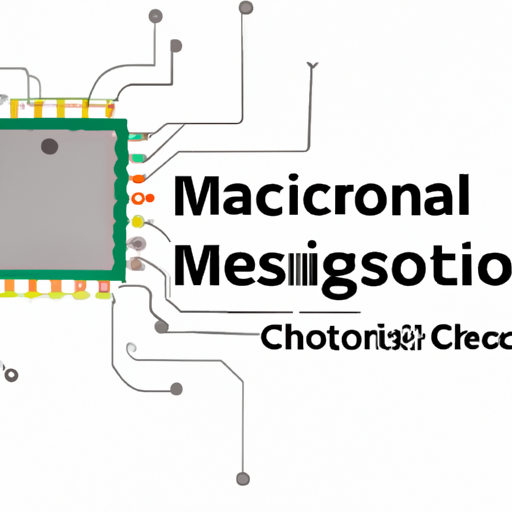
Accurate pin mapping prevents functional and thermal issues. For the TP5591U-CR, follow these primary connection rules:
- VCC/GND: Connect power pins to local decoupling capacitors.
- Exposed Pad: Solder the thermal pad to the PCB ground plane using thermal vias to reduce θJA.
- NC Pins: Tie NC (No Connect) pins according to specific datasheet package variants to avoid floating nodes.
4 — Design & Application Guide
Layout, Decoupling, and Grounding
Layout determines whether datasheet specs are achievable. Place 0.1 µF ceramic and 1 µF bulk caps within 1–2 mm of VCC pins. Use a solid ground plane and route high‑impedance inputs away from digital switching nodes. Guarding is highly recommended for low‑noise inputs to prevent leakage currents from affecting the microvolt-level signals.
5 — Verification & Troubleshooting
Selection checklist for designers: confirm supply range, noise budget, package thermal limits, RRIO needs, and cost vs performance. If oscillation occurs, add a small series resistor (10Ω–100Ω) to isolate capacitive loads at the output.
Key Summary
- Stability: Typical ≤20 µV offset and 0.01 µV/°C drift for stable, low‑calibration systems.
- Resolution: 17 nV/√Hz noise ensures sub‑LSB contributions in high-resolution ADC chains.
- Thermal: Always solder the exposed pad and calculate Tj = Ta + θJA·Pd to prevent performance degradation.
- Layout: Decouple within 2mm and use star grounding to preserve the zero-drift integrity.
FAQ
How to measure TP5591U-CR offset accurately?
Measure with inputs shorted using a low‑thermal EMF fixture, allow warm‑up per datasheet, average multiple readings, and perform the test across temperature points to capture drift. Compare to the datasheet’s typical and guaranteed limits for pass/fail.
What is the best way to test TP5591U-CR noise performance?
Use a low‑noise source and a spectrum analyzer or FFT‑enabled scope, set the measurement bandwidth per datasheet, apply averaging to reduce instrument noise, and subtract instrument noise floor. Ensure input source impedance matches the intended application.
Where should I place decoupling caps for TP5591U-CR?
Place a 0.1 µF ceramic and a 1 µF bulk capacitor as close as possible (≤2 mm) to the VCC pins, with shortest traces to the device and a solid ground connection to minimize supply impedance.
Why is the exposed thermal pad connection critical for TP5591U-CR?
The exposed pad must be soldered to the PCB ground plane to minimize thermal resistance. Proper soldering prevents junction temperature spikes, which maintains the ultra-low drift performance and ensures long-term reliability.